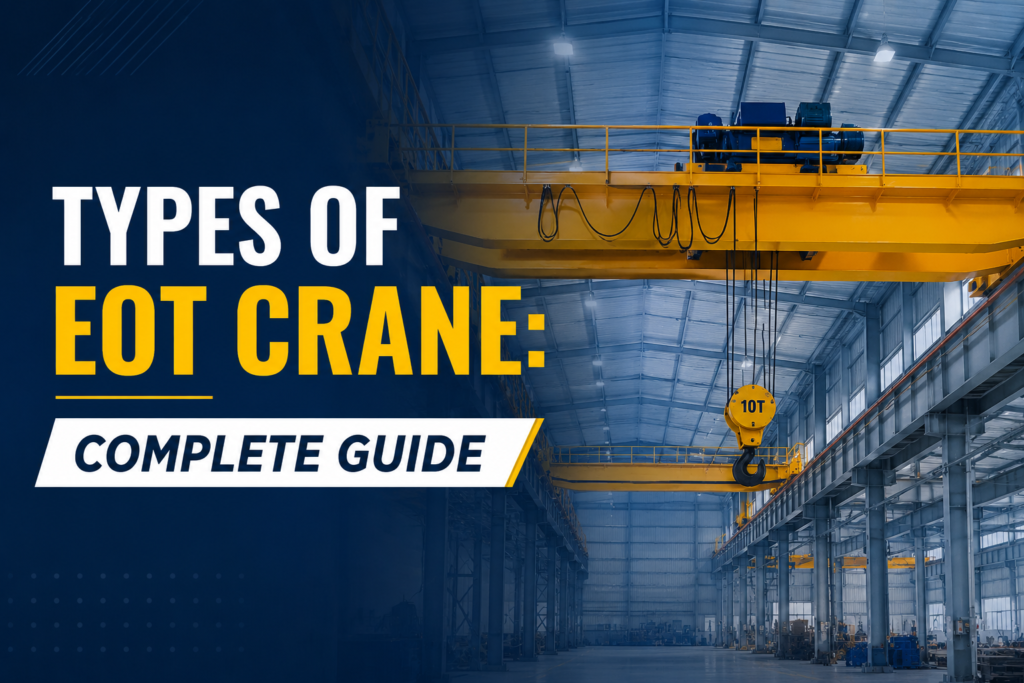
In today’s industrial landscape, efficient material handling plays a vital role in improving productivity, safety, and operational efficiency. Among the most widely used lifting equipment in factories, warehouses, workshops, and manufacturing plants is the Electric Overhead Traveling (EOT) Crane. Designed to lift and transport heavy loads with precision, EOT cranes have become indispensable across various industries.
At Ailas® Engineered Solutions Pvt. Ltd., we specialize in designing and manufacturing high-performance EOT cranes that meet diverse industrial lifting requirements. This guide explains the different types of EOT cranes, their features, applications, and how to select the ideal crane for your business.
What is an EOT Crane?
An Electric Overhead Traveling (EOT) Crane is a bridge crane that moves on overhead runway beams installed inside an industrial facility. It consists of:
- Bridge Girder
- End Carriages
- Hoist and Trolley
- Control System
- Electrical Components
These cranes allow operators to lift, lower, and move heavy materials horizontally and vertically with exceptional accuracy.
Types of EOT Cranes
- Single Girder EOT Crane
A Single Girder EOT Crane features one bridge girder supporting the trolley and hoist.
Features
- Lightweight construction
- Cost-effective solution
- Easy installation
- Lower maintenance
- Suitable for moderate lifting capacities
Load Capacity
Typically ranges from 1 Ton to 20 Tons.
Applications
- Warehouses
- Small manufacturing units
- Assembly lines
- Packaging industries
- Workshops
Advantages
- Lower initial investment
- Reduced dead weight
- Energy-efficient operation
- Less building load
- Double Girder EOT Crane
A Double Girder EOT Crane has two bridge girders that provide greater strength and stability.
Features
- Heavy-duty construction
- Higher lifting capacity
- Increased lifting height
- Better durability
- Suitable for continuous operation
Load Capacity
Typically ranges from 5 Tons to over 200 Tons, depending on the application.
Applications
- Steel plants
- Power plants
- Shipyards
- Heavy engineering industries
- Cement plants
Advantages
- Higher lifting height
- Excellent stability
- Longer service life
- Suitable for demanding industrial operations
- Top Running EOT Crane
In a Top Running EOT Crane, the bridge travels on rails mounted on top of runway beams.
Features
- Maximum hook approach
- Higher lifting capacity
- Suitable for larger spans
- Optimizes available floor space
Applications
- Heavy fabrication units
- Automotive industries
- Steel manufacturing
- Heavy equipment production
Advantages
- Greater load handling capability
- Longer crane span
- Ideal for heavy industrial applications
- Under Running (Suspended) EOT Crane
An Under Running EOT Crane is suspended from the roof structure rather than running on top of runway beams.
Features
- Compact design
- Ideal for facilities with limited floor space
- Excellent accessibility
Applications
- Small workshops
- Assembly plants
- Light manufacturing units
- Warehouses
Advantages
- Better floor utilization
- Lower structural modifications
- Suitable for lighter loads
- Grab Bucket EOT Crane
These cranes are equipped with a grab bucket attachment for handling loose bulk materials.
Applications
- Coal handling plants
- Cement industries
- Mining
- Fertilizer plants
- Waste management facilities
Materials Handled
- Coal
- Sand
- Scrap
- Limestone
- Fly ash
- Magnetic EOT Crane
A Magnetic EOT Crane uses an electromagnetic lifting attachment for handling ferrous materials.
Applications
- Steel mills
- Scrap yards
- Metal recycling plants
- Foundries
Materials Handled
- Steel plates
- Billets
- Scrap metal
- Iron bars
Advantages
- Fast material handling
- Reduced manual labor
- Improved workplace safety
- Flameproof EOT Crane
Flameproof EOT cranes are specially designed for hazardous environments where explosive gases or combustible materials are present.
Applications
- Chemical plants
- Oil & gas industries
- Pharmaceutical manufacturing
- Paint industries
Features
- Explosion-proof motors
- Flameproof electrical components
- Enhanced operator safety
- Compliance with industrial safety standards
Comparison of Different Types of EOT Cranes
| Type | Capacity | Best For | Cost |
| Single Girder | Light to Medium | Warehouses, Workshops | Economical |
| Double Girder | Medium to Heavy | Heavy Industries | Higher |
| Top Running | Heavy Loads | Large Manufacturing Plants | Moderate to High |
| Under Running | Light Loads | Small Facilities | Moderate |
| Grab Bucket | Bulk Materials | Mining, Cement | High |
| Magnetic | Steel Handling | Steel Industry | High |
| Flameproof | Hazardous Areas | Chemical & Oil Industries | Premium |
Industries That Use EOT Cranes
EOT cranes are widely used in:
- Steel Plants
- Automobile Manufacturing
- Power Plants
- Construction Industry
- Warehousing
- Engineering Industries
- Cement Plants
- Textile Industries
- Food Processing Units
- Pharmaceuticals
- Logistics & Distribution Centers
- Heavy Fabrication Units
Benefits of Using an EOT Crane
Improved Productivity
Heavy materials can be moved quickly and efficiently, reducing production downtime.
Enhanced Workplace Safety
Minimizes manual handling and reduces workplace accidents.
Better Space Utilization
Overhead movement frees valuable floor space for operations.
High Precision
Enables accurate positioning of heavy loads.
Reduced Labor Costs
Automation decreases dependency on manual labor.
Long Service Life
Built with durable components for reliable, long-term performance.
How to Choose the Right EOT Crane
Selecting the right EOT crane depends on several factors:
- Lifting Capacity
Determine the maximum weight that needs to be handled.
- Span Length
Measure the distance between runway beams.
- Lifting Height
Ensure the crane provides adequate hook height for your operations.
- Duty Cycle
Consider how frequently the crane will operate.
- Type of Material
Identify whether you need standard hooks, grabs, magnets, or specialized lifting attachments.
- Working Environment
Consider temperature, dust, humidity, and hazardous conditions.
- Future Expansion
Choose a crane that can support future production growth and increased lifting requirements.
Why Choose Ailas® Engineered Solutions Pvt. Ltd.?
Ailas® Engineered Solutions Pvt. Ltd. is a trusted manufacturer and supplier of advanced EOT crane systems designed for superior performance and reliability. Our cranes are engineered to meet the highest quality and safety standards while delivering efficient material handling solutions across industries.
Our Strengths
- Custom-designed EOT cranes
- Robust engineering and precision manufacturing
- High-quality components
- Reliable after-sales support
- Timely project execution
- Compliance with industry safety standards
- Experienced technical team
- Cost-effective lifting solutions
Whether you require a single girder crane for light-duty applications or a heavy-duty double girder crane for industrial operations, our experts can help you choose the ideal solution tailored to your needs.
Conclusion
Choosing the right type of EOT crane is essential for maximizing productivity, improving safety, and ensuring efficient material handling. Understanding the differences between single girder, double girder, top running, under running, grab bucket, magnetic, and flameproof EOT cranes allows businesses to invest in equipment that best matches their operational requirements.
At Ailas® Engineered Solutions Pvt. Ltd., we are committed to delivering innovative, reliable, and customized EOT crane solutions that enhance industrial efficiency and support long-term business growth.
Frequently Asked Questions (FAQs)
- What is the most commonly used type of EOT crane?
The Single Girder EOT Crane is commonly used in small to medium-sized industries for light and moderate lifting applications.
- What is the difference between a single girder and a double girder EOT crane?
A single girder crane has one bridge beam and is suitable for lighter loads, while a double girder crane has two bridge beams, offering higher lifting capacities, greater hook height, and enhanced durability for heavy-duty operations.
- Which industries use EOT cranes?
EOT cranes are widely used in manufacturing, steel plants, power plants, warehouses, automotive industries, cement plants, shipyards, logistics, and heavy engineering sectors.
- What factors should I consider before purchasing an EOT crane?
Important factors include lifting capacity, span length, lifting height, duty cycle, operating environment, material type, and future expansion requirements.
- Can EOT cranes be customized?
Yes. Ailas® Engineered Solutions Pvt. Ltd. offers customized EOT crane solutions designed to meet specific industry needs, including specialized lifting attachments, capacities, spans, and operating conditions.
- How often should an EOT crane be inspected?
Routine inspections should be carried out daily, while comprehensive maintenance and safety inspections should be performed periodically according to operational usage and applicable safety regulations.
- Why choose Ailas® Engineered Solutions Pvt. Ltd. for EOT cranes?
Ailas® Engineered Solutions Pvt. Ltd. delivers high-quality, reliable, and customized EOT crane solutions backed by advanced engineering, stringent quality control, and dependable after-sales support, ensuring safe and efficient material handling for a wide range of industrial applications.